01
Understand the railway system behind the battery
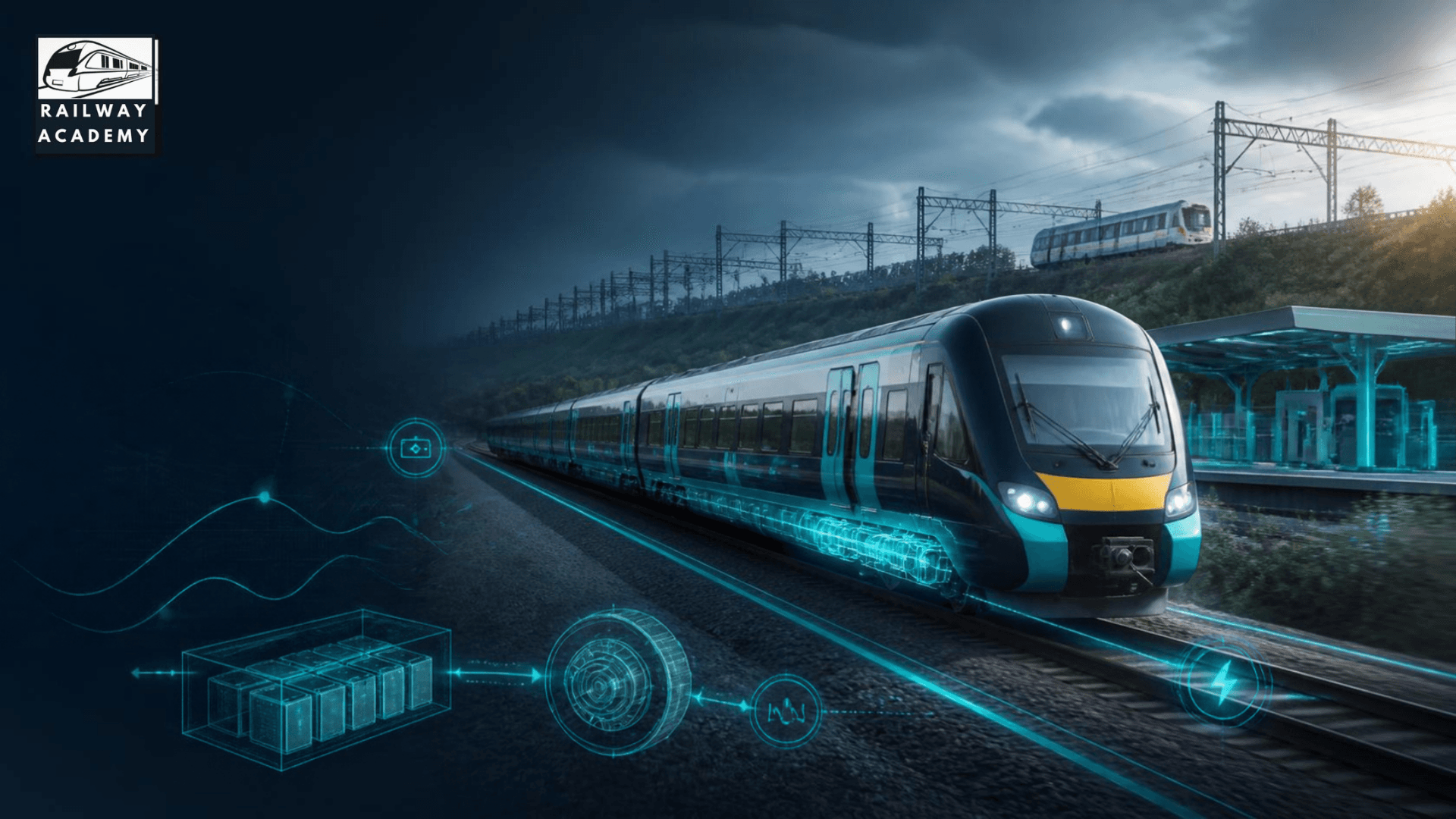
Explore how onboard batteries interact with traction motors, train performance, auxiliary loads, regenerative braking and charging infrastructure.
ZRA Live Masterclass
This masterclass provides a practical railway systems perspective on battery-electric train operations, going beyond battery capacity and advertised range. Participants will understand how route characteristics, gradients, speed, station stops, auxiliary loads, regenerative braking, charging infrastructure and timetables influence energy demand and operational feasibility. The session also explores how battery trains can complement conventional electrification and where full electrification may remain the more suitable engineering solution.
Live online · 120 minutes · Practical case exercise and expert Q&A
One Question to Take Away
A battery train may technically be able to travel a certain distance. But engineering decisions are rarely about distance alone. The more important question is: Can it operate the required railway service reliably, safely and practically?
About ZRA
ZRA creates specialist learning experiences for railway and mobility professionals, connecting technical expertise with innovation, intellectual property, and commercial thinking. This masterclass is designed to help professionals recognise the potential in promising ideas, understand how to protect and develop them, and turn innovation into meaningful real-world value before opportunities are lost.
Why Attend
Whether a battery-electric train can successfully operate a route depends on much more than onboard battery capacity. Route distance, gradients, station stops, operating speed, auxiliary loads, charging opportunities, timetable requirements and operating strategy all influence whether battery-electric operation is technically and operationally viable. This masterclass introduces these relationships from a practical railway systems perspective.
Explore how onboard batteries interact with traction motors, train performance, auxiliary loads, regenerative braking and charging infrastructure.
Understand why battery capacity alone cannot determine operating range—and how gradients, stops, speed and route characteristics change energy demand.
See how dwell time, timetable requirements, charging windows and route availability can influence the feasibility of battery-electric operation.
Explore where batteries may supplement conventional electrification and where full electrification may still be the more appropriate engineering solution.
What You Will Learn
Masterclass Coverage
9 chapters · 120 minutes
How onboard battery energy storage works with railway traction systems. Explore how energy moves through the train during acceleration, cruising, braking, station stops and charging.
Battery capacity is only the beginning of the range calculation. Explore the relationship between: Battery Capacity · Usable Energy · Traction Demand · Operating Range · Route Requirements and understand why two routes of the same distance can create very different battery requirements.
Examine how railway operating conditions influence the energy required to move a train. We will consider: • Route profile • Gradients • Station spacing • Number of stops • Operating speed • Train resistance • Auxiliary loads • Driving strategy • Operational conditions The objective is not to perform detailed traction simulation, but to understand the engineering variables that influence the result.
Must every kilometre of railway be electrified? Explore alternative charging approaches including: Static Charging Charging while the train is stationary. Opportunity Charging Using planned stops or turnaround periods for charging. Overhead-Line Charging Using sections of conventional electrification to operate and replenish onboard batteries. The discussion will also examine why available charging time may be just as important as charging power.
A railway train carries significant kinetic energy while moving. Explore how regenerative braking can: • Recover braking energy • Return or store electrical energy • Reduce net battery energy consumption • Extend usable operating range We will also examine why route characteristics and operating patterns determine how much regenerative energy can realistically be recovered.
A technically capable battery is not automatically an operationally viable railway. Explore the interaction between: Timetable · Dwell Time · Charging Window · Route Availability · Operating Range and see why rolling stock, traction engineering and operations teams must evaluate battery-electric deployment together.
Battery technology introduces new engineering considerations alongside its potential benefits. The masterclass provides an introductory look at: • Operational reliability • Battery safety • Energy-management considerations • Maintenance implications • Degradation and usable capacity • Charging infrastructure availability • Operational resilience The goal is to recognise the questions engineers should ask before moving from concept to deployment.
Would You Electrify This Route? Participants will consider a simplified railway corridor and discuss three possibilities: Continuous Electrification Battery-Electric Operation A Combination of Electrification and Battery Operation Rather than searching for a universal answer, the discussion will examine how the decision changes according to: Route Length · Gradients · Station Stops · Energy Requirements · Charging Opportunities · Operational Constraints
Battery-electric railways may have different roles in different markets. The discussion will consider the relevance of the technology to railway environments including: Canada · United Kingdom · India · Middle East · Emerging Railway Networks The purpose is not to identify one technology as the solution for every network. It is to understand how different railway environments create different engineering requirements.
Masterclass Faculty

MRes Railway Systems Integration — University of Birmingham Tanuja's specialist interests include battery-electric and bi-mode railway traction, railway energy management, power electronics, dynamic power switching and railway systems modelling. Her approach connects the underlying traction technology with the wider railway system—helping participants understand how rolling stock, infrastructure, energy and operations interact when evaluating battery-electric deployment.
Practical, not legal advice. This masterclass provides general educational information and is not a substitute for jurisdiction-specific legal or patent advice.
Who Should Attend
Railway Engineers Understand how battery traction fits within the wider railway system. Rolling Stock Engineers Explore onboard energy storage, traction performance, regenerative braking and range considerations. Electrical & Traction Power Engineers Understand charging strategies, energy flow and the relationship between fixed infrastructure and onboard energy storage. Railway Operations Professionals Explore how schedules, dwell times, turnaround periods and charging windows influence operations. Systems Engineers Understand the interfaces between rolling stock, infrastructure, energy and operations. Project Engineers & Managers Develop the questions needed during early feasibility and technology evaluation. Graduate Engineers Build an accessible systems-level understanding of an emerging railway traction technology. Researchers & Students Connect battery technology concepts with real railway engineering requirements. Professionals Moving into Sustainable Railway Technologies Develop a foundation for understanding battery-electric and alternative traction systems.
No specialist knowledge of battery-electric railway systems is required. Participants with a general background in railways, electrical engineering, mechanical engineering, rolling stock, transport systems or railway operations should be able to follow the discussion.
Session Format
Registration
Complete the form to reserve your seat for this complimentary live masterclass. Your responses will also help Zenith Railway Academy understand the technical areas and emerging railway technologies that professionals would like future masterclasses to explore.
After registration you will receive a confirmation email with the Zoom joining information. Please check spam/promotions if it does not arrive within a few minutes.
Share & Get Involved
FAQs
Ask about a private session for your organisation.
Join Tanuja Kavuri, Industry Expert & Trainer at Zenith Railway Academy, for a practical railway systems masterclass exploring how battery technology, traction energy, route characteristics, charging infrastructure, regenerative braking and railway operations come together when considering battery-electric trains.
Live online · 120 minutes · Date 29th November 2026
About the Disciplines
Battery trains are more than a battery on a train. Whether a battery-electric train can successfully operate a route depends on much more than onboard battery capacity. Route distance, gradients, station stops, operating speed, auxiliary loads, charging opportunities, timetable requirements and operating strategy all influence whether battery-electric operation is technically and operationally viable. This masterclass introduces these relationships from a practical railway systems perspective.