The global railway industry is at a turning point — driven by automation, digital transformation, and the rising complexity of interconnected systems. While technology continues to enhance efficiency and safety, it also introduces new challenges related to system reliability, cybersecurity, and workforce adaptation.
The future of rail safety management lies not in replacing human expertise with automation, but in integrating both to create collaborative, intelligent safety systems. According to Deloitte Transport Analytics (2025), rail networks that combine automated monitoring with human oversight experience 45% fewer safety incidents and achieve 30% higher operational efficiency compared to fully manual operations.
This article explores how the future of rail safety will depend on harmonizing AI-driven automation, predictive analytics, and human decision-making within modern RAMS frameworks.
The Evolution of Rail Safety Management
Rail safety has evolved in three distinct phases — from manual inspection to digital monitoring and now toward intelligent automation.
| Era | Approach | Characteristics | Limitations |
|---|---|---|---|
| Manual Safety (Pre-2000s) | Human-led inspections and checklists | Reactive and labor-intensive | Prone to human error and data gaps |
| Digital Safety (2000–2020) | Sensor-based monitoring and reporting | Data-driven insights and automation | Still required human interpretation |
| Intelligent Safety (2020–Present) | AI-assisted predictive models | Proactive, continuous, and autonomous | Requires integration and validation expertise |
Each stage has contributed to safer, more efficient rail operations, but the next generation of safety management depends on creating a balance between data automation and human intelligence.
The Rising Role of Automation in Safety
Automation in railway safety now extends across signaling, track monitoring, operations control, and rolling stock diagnostics.
Key Areas of Safety Automation
-
Automated Train Protection (ATP): Prevents human errors such as over-speeding or signal overruns.
-
Condition Monitoring Systems: Collect continuous data from sensors to detect faults in brakes, bearings, and tracks.
-
AI-based Surveillance: Monitors station and onboard environments for security and safety violations.
-
Digital Command Control Centers: Use real-time dashboards to coordinate train movements and emergency responses.
Statistical Insight: The World Rail Safety Council (2025) reports that rail networks implementing automation-based safety systems have achieved a 28% reduction in accident rates and a 35% improvement in asset utilization within five years.
Why Human Oversight Still Matters
Despite the advancement of automation, human judgment remains central to safety management. Engineers interpret complex data, make ethical decisions, and validate machine learning outputs.
Human-Centric Functions in Safety Management
-
Ethical Decision-Making: AI may flag a safety concern, but only human experts can weigh operational trade-offs.
-
Incident Response: Human operators coordinate real-world emergency interventions and recovery.
-
System Validation: Engineers verify that AI predictions comply with standards like EN 50126, 50128, and 50129.
-
Cross-Domain Coordination: Safety requires communication between signaling, traction, rolling stock, and OHE departments.
The International Union of Railways (UIC, 2024) emphasizes that “automated systems can detect risks, but human expertise ensures those risks are managed responsibly.”
Integrating Data, AI, and Human Intelligence
The future of rail safety will revolve around collaborative intelligence, where machines handle routine monitoring and humans focus on analysis, verification, and strategy.
1. Data Automation: IoT sensors and machine learning models detect anomalies in real-time.
2. Human Verification: Engineers validate anomalies through technical analysis and operational context.
3. Predictive Insights: Data systems forecast failures and propose solutions.
4. Decision Execution: Human supervisors approve or modify recommendations based on risk levels.
This human-machine synergy creates a closed safety loop, ensuring that automation enhances — not replaces — engineering oversight.
Case Study: Indian Railways – AI and Human Collaboration
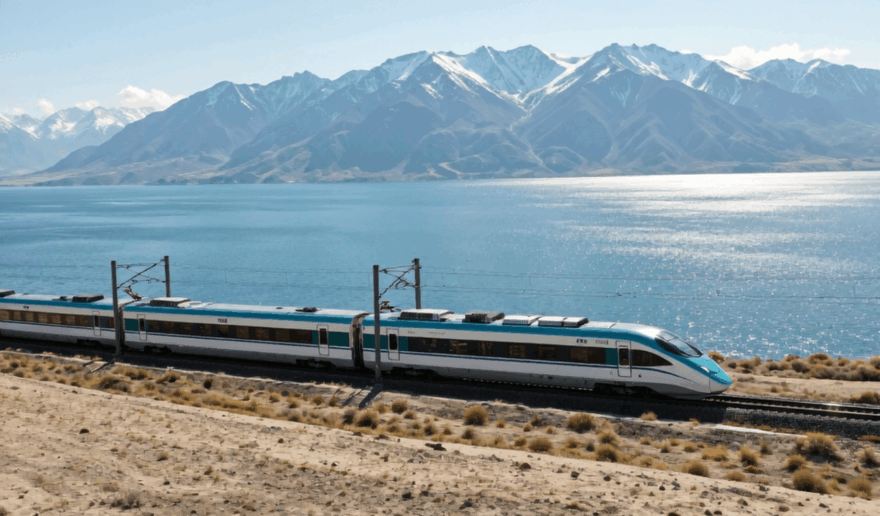
The SMART Maintenance Initiative by Indian Railways is an example of balanced safety management.
-
AI Integration: Predictive algorithms analyze vibration, temperature, and track geometry data.
-
Human Oversight: Engineers validate AI recommendations before issuing maintenance orders.
-
Impact: Reduced derailments by 25% and improved maintenance response times by 40%.
This hybrid system demonstrates how AI-assisted but human-led safety can deliver measurable reliability gains at scale.
Global Trends Shaping Future Safety Systems
| Trend | Description | Impact on Rail Safety |
|---|---|---|
| AI-Integrated RAMS | Embedding predictive algorithms into reliability models | Real-time decision-making |
| Digital Twins | Simulating safety scenarios virtually | Accelerated validation and reduced field testing |
| Cyber-Safety Convergence | Combining IT and operational safety | Protects against data-driven threats |
| Augmented Reality (AR) | Real-time maintenance visualization | Enhances training and operational accuracy |
| Sustainability-Linked Safety | Reducing carbon and noise through design safety | Aligns with ESG compliance |
These global trends highlight that safety is now a technology-driven discipline, requiring multidisciplinary collaboration.
Challenges in Balancing Automation and Human Expertise
-
Over-Reliance on Technology: Excessive automation can reduce human vigilance.
-
Skill Gap: Engineers must be trained to understand both mechanical systems and AI outputs.
-
Data Integrity: Inaccurate data can produce false alarms, impacting operations.
-
Cybersecurity Risks: Greater connectivity increases vulnerability to hacking or manipulation.
-
Ethical Transparency: AI-driven safety decisions must be traceable and explainable.
Recommendation: Future safety frameworks must include Explainable AI (XAI) models that provide clear reasoning for every automated decision, enabling regulatory validation.
Future Skills for Safety Professionals
Safety management is no longer limited to mechanical or operational expertise — it demands a fusion of technical, analytical, and digital skills.
Core Competencies for Future Safety Leaders:
-
Knowledge of RAMS and CENELEC Standards (EN 50126/28/29)
-
Understanding of AI and Predictive Maintenance Tools
-
Familiarity with Data Visualization Platforms (Power BI, Tableau)
-
Competence in Cybersecurity and Risk Assessment
-
Project Management (PMP or PRINCE2 Certified)
-
System Integration and Digital Twin Applications
According to PwC Transport Skills Survey (2025), professionals with hybrid technical-digital expertise in safety domains earn 30–45% higher compensation and enjoy global career mobility.
Emerging Global Job Roles in Safety Management
| Role | Function | Key Hiring Regions |
|---|---|---|
| Safety Data Analyst | Interprets predictive analytics for maintenance and risk | India, UK, Germany |
| AI Safety Integrator | Implements machine learning for operational safety | UAE, Japan, France |
| Cyber-Safety Engineer | Protects interconnected rail systems from digital threats | Middle East, Singapore |
| Digital RAMS Specialist | Combines AI, IoT, and reliability frameworks | Europe, India |
| Independent Safety Assessor (ISA) | Verifies system compliance and validation | Global demand |
(Source: McKinsey Infrastructure Workforce Outlook, 2025)
These emerging roles emphasize the global shift toward data-driven, technology-enabled safety ecosystems.
Quantified Benefits of Balanced Safety Management
| Parameter | Manual Systems | AI-Automated Systems | Hybrid (Human + AI) |
|---|---|---|---|
| Error Detection Accuracy | 65% | 92% | 97% |
| System Downtime | High | Moderate | Low |
| Compliance Efficiency | Medium | High | Very High |
| Workforce Safety | Reactive | Proactive | Predictive |
| Decision Accountability | Full Human | Limited | Shared with Validation |
(Source: Deloitte Safety Intelligence Report, 2025)
The hybrid model clearly demonstrates the superior outcomes of human-AI collaboration.
The Road Ahead: Building a Smart and Safe Future
The coming decade will redefine how safety is managed in the rail industry. Digital twins, AI, and edge analytics will play central roles, but success will ultimately depend on skilled engineers capable of interpreting, validating, and acting on intelligent data.
Future Focus Areas:
-
Expanding predictive safety programs in metro and freight networks.
-
Integrating RAMS frameworks with real-time data visualization.
-
Developing global training standards for AI safety certification.
-
Embedding sustainability metrics into safety KPIs.
The ultimate goal is to build autonomous yet accountable railway systems that are both technologically advanced and human-centered.
Conclusion
The future of rail safety management is collaborative. AI and automation can process vast data streams and identify hidden risks, but it is human judgment that ensures those insights are transformed into safe, ethical, and reliable actions.
As automation continues to evolve, professionals who master this balance — blending digital intelligence with engineering expertise — will lead the transformation of global rail safety.
Want to go deeper?
Prepare for the next generation of safety leadership with our RAMS and System Assurance for Railway and Metro Systems course at Zenith Railway Academy.