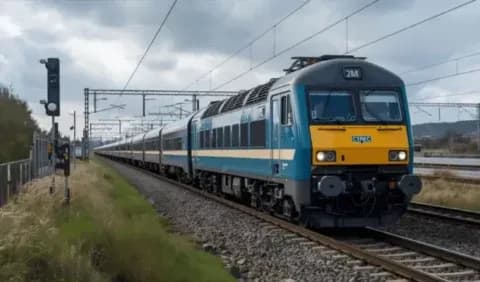
Railway Systems Testing, Integration & Operational Readiness
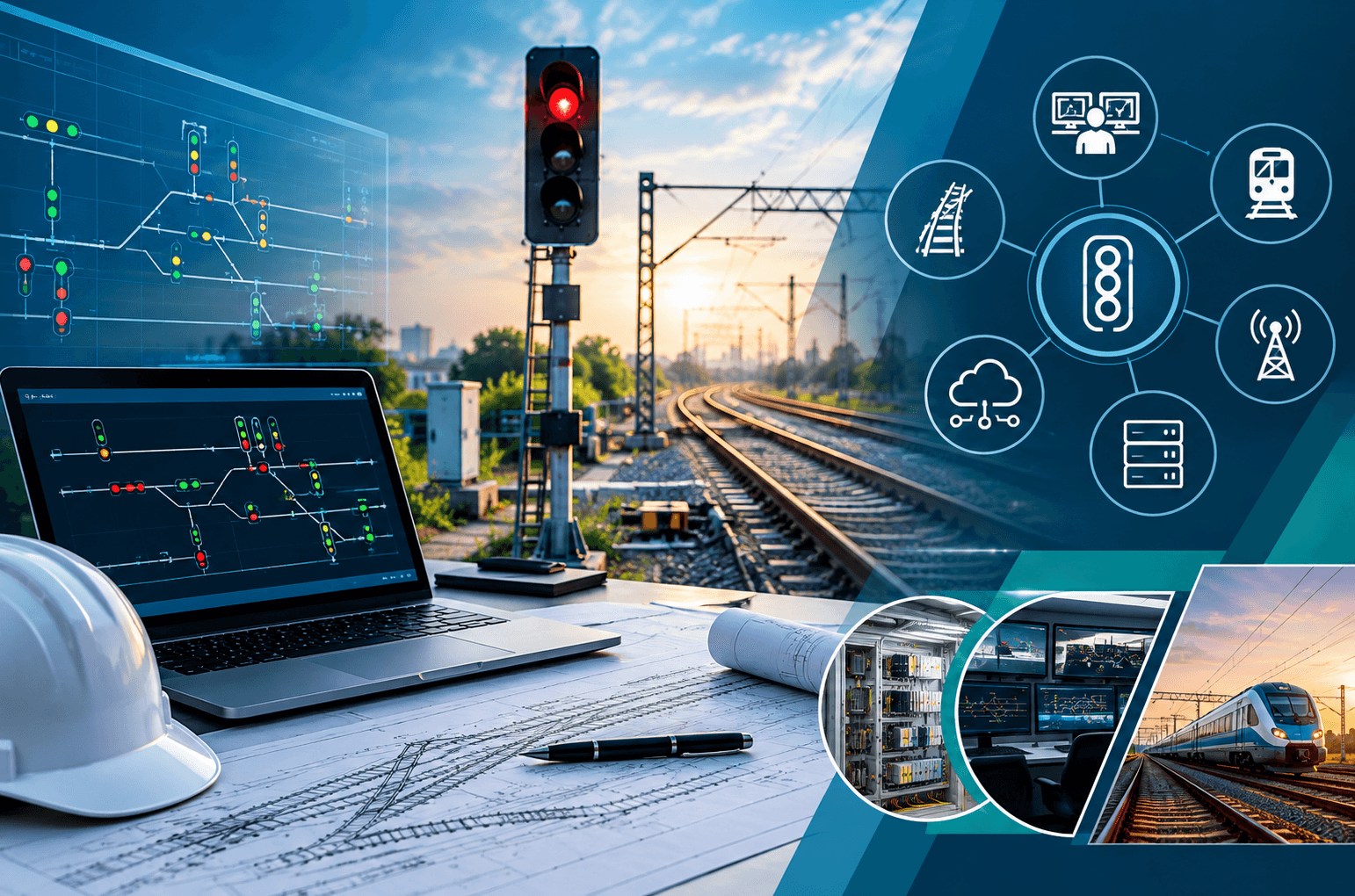
Learn how signalling, rolling stock, power, telecommunications, stations, operations and maintenance systems are brought together and proven as one operational railway. This 30-hour live programme develops practical capability in systems integration, test planning, interface testing, dynamic testing, defect management, trial running, operational readiness and handover.
Answer honestly — the more you check, the better this paid, live certificate course fits your background. Best suited for signalling teams and rail/metro professionals with foundation-level exposure; if you need live commissioning, sign-off or advanced system-engineering depth, talk to an advisor about a more advanced pathway first.
Your fit
0 / 7 selected0%
Keep exploring
Tick the statements that sound like you to see your fit.
What you'll gain, and how the course gets you there.
INR 28,00030 hrsLive courseCertificate included
What this course offers
Program Overview
Railway testing is not simply about checking whether equipment works. Before passenger operations begin, multiple systems must operate together, exchange the correct information, respond correctly to failures, meet operational requirements, demonstrate reliability, produce acceptable evidence, and be formally handed over to the operator and maintainer.
This programme develops that system-level project capability — connecting systems engineering, interfaces, testing, assurance, operations and maintenance into one practical learning journey.
Curriculum
Session by session, from fundamentals to applied practice.
01Session 01
Railway Integration & Testing Lifecycle
Topics covered
Railway as a system of systems
Verification versus validation
Testing, commissioning and acceptance
Integration lifecycle
Key stakeholders
Learning outcomes
Understand how a railway progresses from installation and subsystem completion to integrated operation.
Case studies
Case: Different NorthLink contractors report their systems as "90% complete", but each defines completion differently.
Exercise: Build a railway integration and testing lifecycle map.
02Session 02
System Integration Strategy
Topics covered
Integration objectives
Scope and sequence
Integration milestones
Governance
Responsibilities
Dependencies
Learning outcomes
Learn how integration is planned, governed and coordinated across multiple railway contracts.
Case studies
Case: Who owns system integration when signalling, rolling stock and infrastructure are delivered under separate contracts?
Exercise: Prepare a one-page integration strategy.
03Session 03
Railway Interface Management
Topics covered
Interface types
Interface ownership
Interface registers
Interface control
Critical interfaces
Learning outcomes
Identify the physical, functional, data, operational and organisational interfaces that create system-level risk.
Case studies
Case: Rolling stock meets its stopping tolerance, but train doors and platform screen doors do not consistently align.
Exercise: Build a system integration and interface matrix.
04Session 04
Testing Hierarchy & Test Strategy
Topics covered
FAT
SAT
Subsystem testing
Interface testing
Static testing
Dynamic testing
Trial running
Entry and exit criteria
Learning outcomes
Understand how testing progresses logically from component and factory tests to integrated railway testing.
Case studies
Case: Management wants dynamic testing to begin before all static and configuration prerequisites are complete.
Exercise: Develop the project testing hierarchy.
05Session 05
Requirements-to-Test Traceability
Topics covered
Requirement testability
Verification methods
Acceptance criteria
Traceability
Evidence
Learning outcomes
Learn how project requirements are converted into verification methods, tests and evidence.
Case studies
Case: "The passenger-information system shall provide timely and accurate information." How can this requirement actually be tested?
Exercise: Build a requirements-to-test matrix.
06Session 06
Test Cases & Operational Scenarios
Topics covered
Preconditions
Test steps
Expected results
Acceptance criteria
Normal operation
Degraded operation
Emergency and recovery scenarios
Learning outcomes
Design repeatable test cases covering normal, degraded and emergency railway conditions.
Case studies
Case: A train loses communication with the control system while approaching a station.
Exercise: Prepare one complete integrated railway test case.
07Session 07
Factory & Site Testing
Topics covered
Factory acceptance testing
Factory integration testing
Site acceptance
Configuration verification
Supplier evidence
Open defects
Learning outcomes
Determine what can be demonstrated at factory level and what must be proven on the actual railway.
Case studies
Case: The signalling supplier completes simulated train testing and argues that equivalent tests do not need to be repeated on site.
Exercise: Review a sample FAT plan and identify evidence gaps.
08Session 08
Interface Testing
Topics covered
Interface test boundaries
Prerequisites
Responsibilities
Interface evidence
Failure diagnosis
Defect allocation
Learning outcomes
Translate interface requirements into coordinated tests between contractors and systems.
Case studies
Case: A traction-power isolation command is sent by SCADA but the field equipment does not respond.
Exercise: Prepare an interface test plan.
09Session 09
Static System Integration Testing
Topics covered
Configuration baseline
Command and indication testing
Control-centre interfaces
SCADA
Station systems
Fire and life-safety integration
Learning outcomes
Learn how interconnected railway functions are proven before dynamic train testing begins.
Case studies
Case: A station fire alarm appears locally but fails to produce the correct indication at the operations control centre.
Exercise: Prepare an integrated static test sequence.
10Session 10
Dynamic Testing & Rolling-Stock Integration
Topics covered
Train–signalling interaction
Train detection
Braking and stopping
Train–platform interface
Traction-power interaction
Progressive dynamic testing
Learning outcomes
Understand progressive railway testing with moving trains.
Case studies
Case: A test train experiences intermittent emergency braking at one infrastructure location.
Exercise: Develop a progressive dynamic-testing plan.
11Session 11
Defect Management & Test Evidence
Topics covered
Defect severity
Defect ownership
Root cause
Retesting
Regression
Residual defects
Test records
Learning outcomes
Manage test failures from identification to correction, retest, closure or conditional acceptance.
Case studies
Case: 180 defects remain open before trial running. Which ones should stop programme progression?
Exercise: Classify sample defects and create a defect-management workflow.
12Session 12
Safety, Assurance & Regulatory Readiness
Topics covered
Hazard log
Safety requirements
Safety evidence
Independent assessment
Regulatory interfaces
Residual risk
Learning outcomes
Understand how testing evidence supports railway safety acceptance and authorisation.
Case studies
Case: The railway must demonstrate evacuation of a failed train inside a tunnel involving multiple systems and organisations.
Exercise: Create a safety requirement and evidence chain.
13Session 13
Trial Running & Reliability Demonstration
Topics covered
Trial-running strategy
Service build-up
Reliability targets
Failure attribution
Defect trends
Trial-running exit criteria
Learning outcomes
Plan progressive railway operation before passenger service and determine whether reliability is sufficient.
Case studies
Case: The railway can run its timetable but continues to experience repeated door-control and passenger-information failures.
Exercise: Develop a staged trial-running and reliability plan.
14Session 14
Operational Readiness
Topics covered
Staff competency
Operational procedures
Maintenance readiness
Documentation
Spares and tools
Emergency preparedness
Readiness gates
Learning outcomes
Assess whether the complete operating organisation is ready—not just the engineering systems.
Case studies
Case: Engineering is nearly complete, but driver training, spares, maintenance documentation and asset data remain incomplete.
Exercise: Complete an operational-readiness assessment and heat map.
15Session 15
Handover, Entry into Service & Stabilisation
Topics covered
Operational acceptance
Handover dossier
Conditional handover
Entry into service
Early-life support
Post-opening performance
Stabilisation
Learning outcomes
Bring together testing, assurance and operational evidence to support the final opening decision.
Case studies
Case: Four weeks before opening, safety tests remain incomplete, fleet reliability is below target and the regulator requires additional evidence. Should the railway open?
Exercise: Prepare a go/no-go recommendation and 90-day stabilisation plan.
What you'll walk away with
This programme develops cross-functional capability relevant to railway project positions across systems integration (Systems Integration Engineer/Manager, Interface Manager), testing & commissioning (Testing Engineer, T&C Engineer/Manager), systems engineering & assurance (Systems Engineer, Verification & Validation Engineer, Systems Assurance Engineer), project delivery (Railway Project Engineer, Project Manager, Technical Interface Manager) and operational readiness (Trial Running Engineer, Operational Readiness Manager, Asset Acceptance / Handover Manager). Role relevance depends on prior engineering experience, railway domain knowledge and project exposure — the programme strengthens project capability and does not guarantee employment or professional authorisation.
Enrollment flow
What happens once you enroll.
A simple three-step flow from paid enrollment to live session access and certificate completion.
Step 01
Enroll
Enroll in the course
Enroll in the paid live course and confirm your learner details. Final access duration should be confirmed before purchase.
Step 02
Access
Get live session access details in your inbox
The team sends cohort schedule and login credentials for the learning management system after enrollment.
Step 03
Certify
Attend sessions and complete certification requirements
Attend the live sessions, complete checkpoints, and follow the certification process shared by the academy team.
What's included
Everything you get with enrollment.
Live instructor-led sessions across the full course curriculum
Extended LMS access for the length of the course window
Unlimited re-watches of every session and demo
Downloadable reference notes and documentation templates
Advisor support if you want to confirm fit before or during the course
Certificate of completion on meeting assessment requirements
Rail Rewards
Complete this course, earn 500 Rail Points.
Click to know moreShow less
What can you use Rail Points for?
ZRA branded merchandise
Railway-themed collectibles
Digital learning badges
Learner recognition opportunities
Discounts on signalling & HSR paid courses
Access to selected premium micro courses
Priority seats in live masterclasses
Rail Rewards is ZRA's learner motivation program. Every eligible activity earns points you can redeem against merchandise, badges and course discounts.
Railway Signal Engineering, CBTC, ERTMS, AI & ML, Data Analytics, Cybersecurity
04
Veera Venkata Nagaraju Duggirala
Teaches ETCS | CBTC | ERTMS
Veera Venkata Nagaraju Duggirala
Teaches ETCS | CBTC | ERTMS
Profile details coming soon.
30+ years global experience; Ex-Alstom, Parsons, Cyient, GE, Indian RailwaysProfile
Certificate & Assessment
Earn a certificate that reflects structured learning.
Learners who complete the course and clear the assessment can request a ZRA certificate of completion — indicating that they have covered the course curriculum and met the defined completion requirements.
Certificate Criteria
Complete required course modules
Clear all module knowledge checks
Complete case-based exercise in Module 4
Score above passing threshold in final assessment
Submit course feedback form
Raise certificate request via LMS
Certificate sample
Fee & Enrollment
+9
Counsellors online now
Invest in practical, job-ready skills.
Join the live cohort, complete the 30 hrs pathway, and follow the certificate requirements with your instructor.
Avg reply under 4 hours
Terms & Conditions
Refund Policy
Please note that all course fees are non-refundable. We encourage participants to carefully review the course details and schedules before enrolling. This policy helps us plan and deliver high-quality sessions and maintain affordable fees for all.
Transfer Policy
Once enrolled, the course fee cannot be transferred to another program, batch, or individual. We appreciate your understanding, as each course is designed with a specific schedule and structure to ensure effective learning.
Course Access and Validity
Access to course materials and sessions will be activated only after successful confirmation of payment. The access will remain valid as per the duration mentioned in the course guidelines. Any request for extension may be considered on a case-by-case basis and may involve additional charges.
Payment Confirmation & Receipts
We recommend keeping a copy of your payment confirmation or transaction ID for your records. Please note that the Academy cannot be held responsible for unsuccessful transactions made through third-party payment gateways. We truly value your learning journey with us and are here to assist you at every step. If you have any questions, feel free to reach out to our support team.
Fast answers on LMS access, prerequisites, assessment, certification, fee terms, and support for this course.
01
What is the main focus of this programme?
The programme focuses on how individual railway systems are brought together, tested and demonstrated as a complete operational railway. It covers integration strategy, interfaces, testing, defects, trial running, operational readiness and handover.
02
Is this a subsystem-specific testing course?
No. The programme is intentionally cross-disciplinary and focuses on system-level railway integration and testing. Examples are drawn from signalling, rolling stock, traction power, telecommunications, stations and operations, but the programme does not attempt to teach the detailed design of each subsystem.
03
Who should attend?
The programme is particularly suitable for professionals working in systems engineering, testing and commissioning, systems integration, project management, interface management, RAMS and assurance, railway operations, rolling stock, signalling, electrification, telecommunications, and operational readiness and handover.
04
How much experience do I need?
The programme is designed primarily for professionals with railway, metro, infrastructure, systems or engineering experience. Approximately three or more years of relevant experience is recommended, although suitability depends on the participant's role and technical background.
05
Is the programme theoretical or practical?
The programme is applied and case-based. Each session combines focused concepts with a railway case or exercise. Participants progressively develop practical artefacts including a system integration matrix, testing strategy, traceability matrix, interface test plan and operational-readiness checklist.
06
What project will I work on?
Participants work on the NorthLink Metro Corridor, a realistic fictional project created specifically for the programme. It provides a common scenario for applying integration, testing, trial-running and handover concepts across the course.
07
Will signalling and rolling-stock testing be covered?
Yes, but from a systems-integration perspective. The objective is to understand how signalling, rolling stock, traction power, telecommunications, stations and operations interact—not to provide detailed subsystem design training.
08
What certification will I receive?
Participants who meet the required attendance and assessment criteria receive a Zenith Railway Academy Certificate of Completion. Any external or CPD accreditation should be displayed only after formal approval.
09
What is the programme delivery mode?
The programme is delivered live online through 15 instructor-led sessions of two hours each.
10
Are recordings available?
Session recordings may be provided through the learning-management system for the stated access period. The final access period should be confirmed on the enrolment page.
11
Is there an assessment?
Yes. Assessment combines practical exercises, a requirements/test assignment, case analysis and an integrated capstone project.
12
Can organisations nominate teams?
Yes. A corporate version can be customised around the organisation's project, testing stage, systems architecture or operational-readiness requirements.
More questions? See our full FAQ for payments, EMI, refunds, and support.
Send an enquiry
We will match you to the right free course or certification route.
.png)









.png&w=3840&q=75)